
(734) 697-0806
LHIGutter@aol.com
Belleville, mi
Maintaining a clean drainage system is a constant challenge for many homeowners. Falling leaves, twigs, and pine needles quickly clog channels, leading to water overflow and potential structural issues around your home foundation.
Installing protective covers over your drainage channels seems like an ideal solution to prevent these constant headaches. However, many people wonder if gutter guards really deliver on their promises or if they simply create a different set of maintenance problems over time.
This guide covers how these protective barriers function, their actual benefits, potential drawbacks, and key considerations to make before investing your money.

Gutter protection systems act as physical barriers placed directly over or inside your open roof channels. Their main design objective is to allow rainwater to flow freely through while blocking solid matter like pine needles, oak leaves, and seed pods.
Different designs rely on physical screening, micro-mesh filtration, or surface tension principles. Mesh screens filter out solid objects directly, while surface tension covers guide water around a curved front edge and drop debris onto the ground below.
While these systems stop large obstructions, no design completely eliminates tiny particles like roof shingle grit or heavy pollen. Small particles can still enter during heavy rainfall events, though total blockages occur far less frequently.
The primary advantage of adding protection to your channels is a major reduction in manual maintenance. Instead of cleaning out thick sludge multiple times every fall, homeowners clear minor surface debris much less often.
Preventing standing water also reduces structural risks to your home exterior. Clogged channels overflow during heavy storms, causing water to pool around foundation walls, flood basements, or rot wooden fascia boards behind the roofline.
Additionally, stopping standing water eliminates prime breeding grounds for mosquitoes and pests. Dry channels offer far fewer opportunities for insects or rodents to build nests near your roofline throughout the summer season.
Despite bold marketing claims, no filtration system is 100 percent maintenance-free. Leaves and pine needles can settle flat on top of screens during long dry spells, blocking water from entering until cleared away.
Heavy downpours can also cause water to overshoot the front edge of certain solid cover styles. When rainfall moves too quickly across smooth surfaces, water bypasses the filtration edge and falls straight down onto landscaping below.
Winter weather brings another consideration regarding ice formation. Snow melting off your roof can refreeze over fine mesh screens, forming icicles along the roof edge and temporarily blocking melted snow from entering the underlying channel.
Micro-mesh covers feature fine stainless steel wire mesh over a sturdy frame. These systems excel at filtering out fine debris like oak tassels and shingle granules while allowing heavy rainfall to enter the drainage channel underneath.
Reverse curve systems use curved solid aluminum panels. Water follows the smooth curve into a narrow horizontal slot using natural surface tension, while dry leaves slip past the edge and fall directly onto the ground.
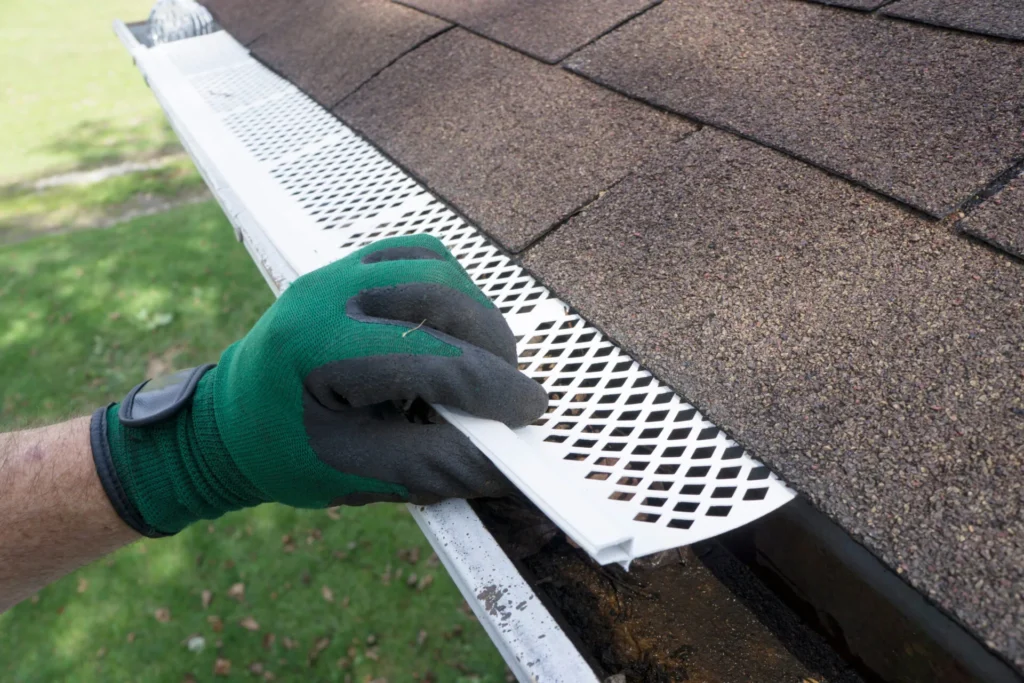
Screen covers use plastic or metal grids with open holes. They are simple to install and block large leaves effectively, though smaller debris like pine needles often slip through the larger openings over time.
Evaluate the surrounding tree canopy near your property before choosing a specific style. Oak, pine, and maple trees shed different types of debris, requiring specific mesh sizes or panel shapes for optimal performance.
Roof pitch and material also dictate which cover designs work best on your home. Steeper roofs accelerate water velocity, requiring covers designed specifically to catch high-speed water flow without overshooting the outer edge.
Finally, check how cover installation affects existing roof warranties. Certain systems slip beneath edge shingles, which might void manufacturer coverage on newer asphalt roofs if installed incorrectly or without proper care.
Keeping your residential roof channels clear is essential for protecting your property foundation, fascia boards, and landscaping from severe water damage. LHI Gutter delivers dependable drainage support across Ann Arbor, MI, helping local homeowners safeguard their properties season after season.
If you are experiencing overflowing channels, saggy sections, or constant clogs, our team provides reliable channel repair, seamless gutter installation, complete gutter replacement, regular gutter cleaning, and custom leaf protection installation tailored to your specific tree cover.
Proper channel protection depends on matching the right design to your specific roof pitch and surrounding foliage. Our experienced specialists evaluate your home layout to recommend practical solutions that prevent standing water and minimize annual maintenance hassles.
Do not wait for heavy rainstorms to reveal hidden structural damage around your fascia or foundation. Call LHI Gutter today at +1(734) 697-0806 to discuss your drainage concerns or schedule a personalized on-site consultation with our local home improvement experts.
LHI Gutter is a family-owned company with over 38 years of experience delivering trusted gutter installation, repair, cleaning, and leaf protection services