
(734) 697-0806
LHIGutter@aol.com
Belleville, mi
A gutter rarely fails on a sunny day. It fails during the first hard rain after a long dry stretch, when water pours over the edge and lands right where your foundation needs it least. Knowing the common gutter problems early gives you time to fix them before a small issue turns into a costly repair.
This guide covers what goes wrong with gutters across Wayne County, what causes each problem, and what you can do about it. Homeowners in Westland and Dearborn deal with the same mix of heavy leaf fall, freezing winters and spring storms, so the advice below applies to most homes in the area.
Michigan puts gutters through a lot. Autumn drops wet leaves into the channels, winter freezes standing water, and spring brings storms that test every seam and bracket. Most common gutter problems start with one of these cycles and grow quietly until water finds a way into the fascia, siding or basement.
A quick walk around your home after a rainstorm tells you plenty. Look for water streaming over the edge, dark streaks on siding, pooled water near the foundation or gutters that look bent away from the roofline. These signs of gutter damage are easier to spot while it is still raining.

Clogged gutters are the most frequent issue. Leaves, pine needles, shingle grit and small twigs pack into the channel and block the flow toward the downspout. Trees close to the roof make it worse. Once water has nowhere to go, it climbs over the front edge, and you get overflowing gutters during even moderate rain.
Use a sturdy ladder on level ground and wear gloves. Scoop debris by hand or with a gutter scoop, then flush the line with a garden hose to confirm water reaches the downspout. These gutter cleaning tips work best twice a year, once in late fall after the leaves drop and once in spring.
Leaking gutters usually drip from joints, end caps or small holes. The causes of gutter leaks include aging sealant, rust spots, loose fasteners and ice expansion that pulls seams apart. A steady drip at a corner often points to failed sealant, while pinholes along the bottom suggest corrosion inside the trough.
For a small leak, dry the area, scrub off old sealant and apply a fresh bead of gutter sealant along the seam. Let it cure fully before the next rain. Small patches work for minor rust holes, but widespread corrosion means the section is near the end of its life.
Need a hand with your gutters? LHI Gutter helps homeowners across Westland, Canton and Livonia. Call +1(734) 697-0806 to book an inspection.
Sagging gutters happen when hangers loosen, spikes back out of the fascia or the weight of water, ice and debris becomes too much. A sag creates low spots where water sits, which speeds up rust and adds more weight. If you see a visible dip or a gap between the gutter and the board, act soon.
Replacing worn spikes with hidden hangers, spaced about every two feet, restores support. Check the fascia for soft or rotted wood first, because new hardware will not hold in damaged boards. Gutter repair tips like this are simple, but a long sagging run is safer to hand to a professional.
Gutter drainage problems come from poor slope. Gutters need to tilt slightly toward the downspout, roughly a quarter inch for every ten feet. When the pitch shifts, water lingers in the middle of the run, breeds mosquitoes and grows algae. Pooling after rain stops is a clear sign the slope is off.
Adjusting hangers to restore the pitch often solves the problem. Hold a level against the trough, then raise or lower the brackets until water runs toward the outlet. Test with a hose. If the slope keeps shifting, the fascia or the roof edge may be moving, and that needs a closer look.
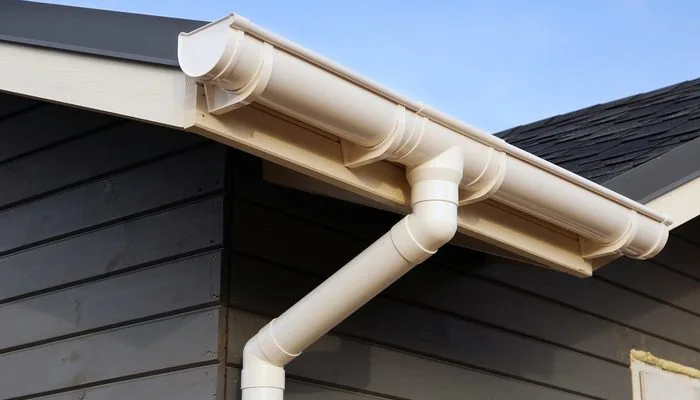
Gutter downspout problems include clogs at the elbow, crushed sections, loose straps and outlets that dump water right at the foundation. When a downspout backs up, the gutter above it overflows. Flush each downspout with a hose, and if water barely trickles out, a clog is sitting somewhere inside the pipe.
Extensions that carry water at least four to six feet from the house make a big difference, and they are easy to add. Homes in Canton and Taylor with finished basements benefit the most, since even a small amount of soil saturation next to the wall can lead to seepage after heavy storms.
Damaged gutters rarely stay a gutter-only problem. Spilling water soaks the fascia, stains siding, washes out landscaping and settles near the foundation. Over time that moisture can cause mold, cracked concrete and basement leaks. To prevent water damage from gutters, treat every overflow or drip as a repair job, not a one-off event.
Winter adds ice dams, which form when melting snow refreezes at the roof edge and backs water under shingles. Clean gutters in late fall, clear snow from the lowest roof edge when safe and make sure the attic is insulated and ventilated. Warm attics melt snow unevenly, and that uneven melt is what builds the ice.
Gutter guards reduce the amount of debris that enters the trough, though they still need an occasional rinse. They work well for homes under heavy tree cover in Livonia and Allen Park. Pair them with regular gutter maintenance tips, such as checking brackets, seams and outlets at the start of each season.
Call for help when gutters pull away in long sections, fascia boards are rotted, water enters the basement or the roofline is too high to reach safely. Ladder work carries real risk, especially on two-story homes. A trained crew can also spot hidden issues, such as failed flashing or poorly placed downspouts, that are easy to miss from the ground.
Most common gutter problems follow the same pattern: debris builds up, water has no path and small damage spreads. Cleaning twice a year, checking slope and hangers, and keeping downspouts clear stops the pattern early. A few minutes after each storm can save you from far bigger repairs around Wayne County homes.
Gutter trouble is easier to handle when it is caught early. If you spotted overflow, sagging runs or a steady drip while reading this, LHI Gutter can inspect your system and explain what needs attention. Our team handles gutter cleaning, gutter repair, downspout repair, gutter guards and seamless gutter installation for homeowners in Westland, Dearborn, Canton, Livonia, Taylor and surrounding Wayne County neighborhoods.
We look at slope, hangers, seams and drainage so the fix lasts through Michigan’s freeze and thaw cycles. Whether it is one loose bracket or a full run that needs replacing, you get a clear answer and a plan. No pressure, just straightforward advice.
You do not need to wait for a failure to call. A short visit now can protect your fascia, siding and foundation before the next heavy rain. Call LHI Gutter at +1(734) 697-0806 or request a time that fits your schedule, and we will help you choose the right next step for your home.
LHI Gutter is a family-owned company with over 38 years of experience delivering trusted gutter installation, repair, cleaning, and leaf protection services